🏰 Jaipur Hotels 🏡 Home Book a Room →
🏰 Founded 1727 · Rajasthan, India

The Magnificent
Story of Jaipur

From a visionary Maharaja's dream to India's best-planned heritage city — the Pink City's 300-year journey of grandeur, glory, and resilience.

1727
Year Founded
300+
Years of History
3.1M+
Population Today
UNESCO
World Heritage City
Scroll to explore
Maharaja Jai Singh II
Founder · Kushwaha Rajput
Vidyadhar Bhattacharya
Chief Architect · Bengal
Shilpa Shastra
Ancient Architecture Manual
Pink City · 1876
Painted for Prince of Wales
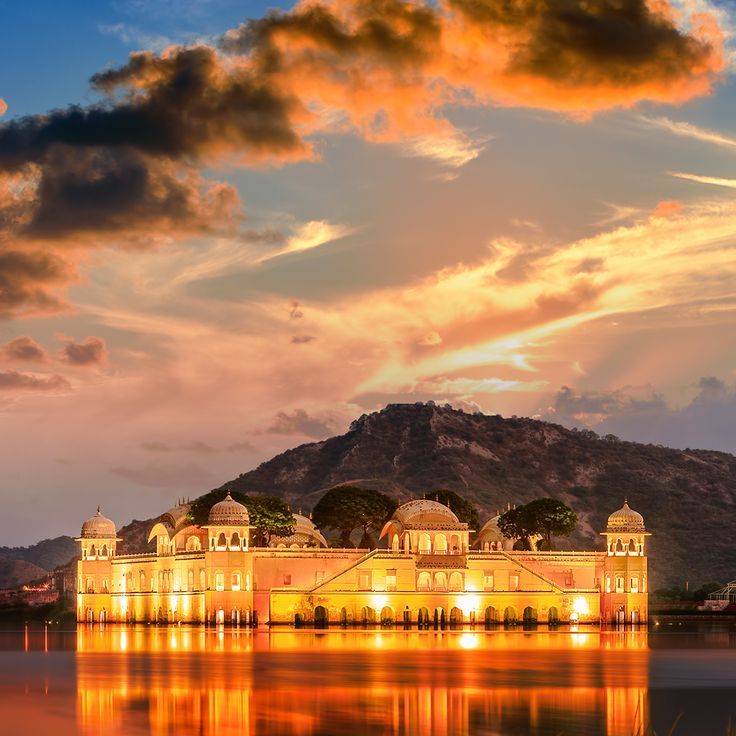
Jal Mahal Jaipur
🌅
Jal Mahal — Man Sagar Lake Built by Maharaja Madho Singh I · 18th Century
The Founder

Maharaja Jai Singh II — Warrior, Astronomer & Visionary

Jaipur gets its name from its founder Maharaja Jai Singh II (1693–1744) — the great warrior and astronomer who came to power at the age of 11 on the death of his father Maharaja Bishan Singh. Trained by the finest scholars in art, science, philosophy and military affairs, his scholastic background matched his innate wits.

When Jai Singh was 15, Emperor Aurangzeb summoned him to court over a treaty violation. The young Maharaja replied that since the Emperor had extended his hand in greeting, it implied he would protect Jai Singh and his kingdom. Impressed by this brilliant reply, Aurangzeb conferred the title "Sawai" — meaning one and a quarter — a title all of Jai Singh's descendants proudly kept.

Jai Singh's lineage traces back to the Kushwaha Rajput clan who came to power in the 12th century, builders of the magnificent Amber Fort whose might spread to encompass the kingdoms of Mewar (Udaipur) and Marwar (Jodhpur).
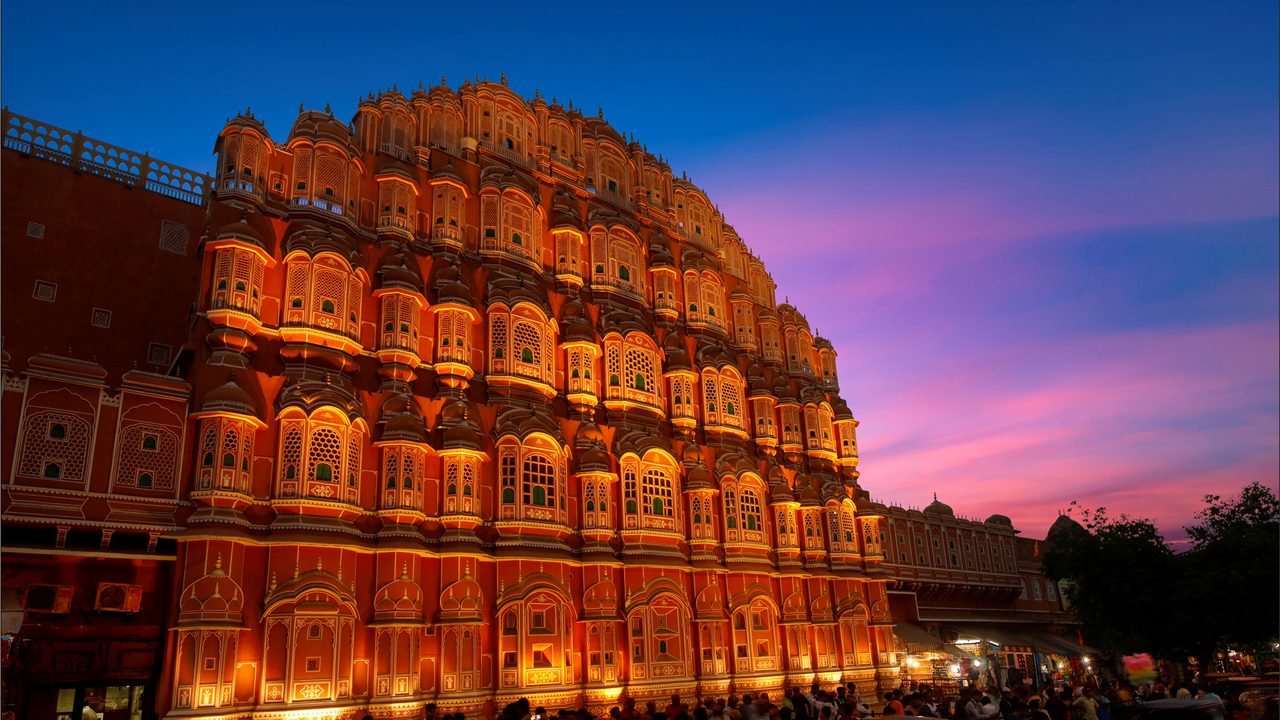
Hawa Mahal Jaipur
🏯
Hawa Mahal — Palace of Winds Built 1799 · 953 Jharokha Windows
City Planning

India's Best Planned City — Built on Ancient Science

Much of the credit for Jaipur's creation goes to Vidyadhar Bhattacharya, chief architect from Bengal, who — with Jai Singh's approval — founded the city on strong scientific principles. Laid out according to the Shilpa Shastra, an ancient architectural manual, it remains one of India's finest planned cities even today.

The city was meticulously divided into nine rectangular sectors (chokris) separated by wide roads. The original walled city measured 5.1 km × 4.6 km, with seven grand gates — each named after the direction or destination they faced.

"The city is built on the principles of the Vedic Vastu Shastra — every street, every market, every building placed in perfect mathematical harmony with the cosmos."

Water scarcity forced Jai Singh to move from Amber. He chose this site in the plains and constructed Man Sagar Lake and multiple step-wells (baoris) to support the growing population.

🎨 Why is Jaipur the Pink City?

In 1876, Maharaja Ram Singh II ordered the entire walled city to be painted terracotta pink — traditionally a colour of hospitality and welcome — to greet HRH Prince Albert Edward (later King Edward VII) on his royal visit to India.

The grand gesture so charmed the prince that the tradition was maintained. Today, every building owner in the old walled city is legally required to preserve the pink colour — a living tribute to Rajput hospitality that has lasted 150 years.

🎨 Painted in 1876 👑 For Prince Albert Edward 📜 Protected by Law 🏙️ Entire Walled City 🌺 Colour of Hospitality
Political Journey

From Rajput Kingdom to State Capital

Three centuries of power, alliances, and transformation

Mughal Alliance

Navigating the Mughal Empire

After Jai Singh came to power, he supported Aurangzeb's son Aazam Shah's bid for the throne — who lost to his brother Bahadur Shah. The new emperor demanded Jai Singh's removal. Undeterred, Jai Singh formed a formidable Rajput coalition and reinstated himself.

As the Mughal empire waned after Aurangzeb's death in 1707, the Rajput states gained renewed independence. The Kushwaha clan's long alignment with the Mughals proved strategically invaluable — trade routes flourished and the arts thrived.

After Jai Singh's death in 1744, his sons squabbled for power. Without a strong monarch, the kingdom fell open to invasion — neighbouring Rajput states and the Marathas usurped large territories.

British Era

The British Connection & Independence

As with the Mughals, Jaipur maintained cordial relations with the British East India Company. During the War of Independence in 1857, Jaipur remained loyal to the Crown — a decision that preserved its administrative independence.

In 1922, Man Singh II ascended the throne. Under his reign, modern civic buildings — the Secretariat, schools, hospitals, public offices — were constructed. Jaipur began its transformation into a modern city while preserving its heritage.

After Independence in 1947, Jaipur merged with Jodhpur, Jaisalmer, and Bikaner to form the Greater Rajasthan Union. Man Singh II was bestowed the title of Rajapramukh. In 1956, Jaipur became the capital of the state of Rajasthan.

300 Years · Key Events

Timeline of Jaipur

1693 AD
Birth of Maharaja Jai Singh II

Born to Maharaja Bishan Singh of the Kushwaha Rajput clan. Destined for greatness, he received training from the finest scholars of the era in art, science, philosophy, and military strategy.

1699 AD
Jai Singh Ascends the Throne — Age 11

After the death of his father, the young Jai Singh becomes Maharaja of Amber. Despite his age, he quickly proves his political acumen and military capability.

1708 AD
Title "Sawai" Conferred by Aurangzeb

A 15-year-old Jai Singh brilliantly deflects Aurangzeb's anger with a witty remark. Impressed, the Emperor grants him the title "Sawai" (one and a quarter) — acknowledging his extraordinary capabilities. All descendants kept this title.

1727 AD
Jaipur City Founded

Facing water scarcity in Amber, Jai Singh commissions architect Vidyadhar Bhattacharya to plan a new city on the plains. Built on Shilpa Shastra principles, Jaipur becomes India's first planned city — with nine rectangular sectors, wide boulevards, and integrated water systems.

1734 AD
Jantar Mantar Completed

Jai Singh, a passionate astronomer, completes Jantar Mantar — a monumental astronomical observatory with 19 major instruments. The world's largest stone sundial, accurate to 2 seconds, still functions today. Now a UNESCO World Heritage Site.

1744 AD
Death of Jai Singh II

The great Maharaja passes away, leaving behind a magnificent legacy. His sons begin a succession struggle, weakening the kingdom. Neighbouring Rajput states and Maratha forces exploit the instability and usurp territories.

1876 AD
Jaipur Painted Pink

Maharaja Ram Singh II orders the entire walled city painted terracotta pink to welcome Prince Albert Edward (future King Edward VII). The colour of Rajput hospitality becomes Jaipur's identity. By law, all buildings in the old city must maintain this pink colour to this day.

1922 AD
Man Singh II — Era of Modernisation

Maharaja Man Singh II ascends the throne and oversees a period of modernisation. Civic buildings, schools, hospitals, public offices, and infrastructure are built, transforming Jaipur into a modern administrative centre while preserving its glorious heritage.

1949 AD
Greater Rajasthan Union

After India's independence, Jaipur merges with the princely states of Jodhpur, Jaisalmer, and Bikaner to form the Greater Rajasthan Union. Man Singh II is given the title of Rajapramukh (Governor) of the new province.

1956 AD
Jaipur Becomes State Capital

Jaipur is officially designated the capital of the newly reorganised state of Rajasthan. The Pink City transforms into the political, cultural, and economic heart of India's largest state by area.

2019 AD
UNESCO World Heritage City

Jaipur is inscribed on the UNESCO World Heritage List, recognised for its exceptional urban planning, cultural landscape, and living heritage. The walled city's remarkable 300-year-old grid plan earns global recognition.

Royal Lineage

Notable Rulers of Jaipur

The Kushwaha Rajput dynasty that shaped a civilization

Ruler Reign Title Key Contribution
Maharaja Jai Singh II 1699–1744 Sawai Jai Singh Founded Jaipur City; built Jantar Mantar; patron of arts & sciences
Maharaja Ishwari Singh 1743–1750 Sawai Ishwari Singh First successor; continued expansion of the city
Maharaja Madho Singh I 1750–1768 Sawai Madho Singh I Built Jal Mahal (Water Palace) on Man Sagar Lake; expanded the kingdom
Maharaja Pratap Singh 1778–1803 Sawai Pratap Singh Built the iconic Hawa Mahal (Palace of Winds) in 1799; great patron of arts
Maharaja Ram Singh II 1835–1880 Sawai Ram Singh II Painted Jaipur pink (1876); built Ramgarh Lake; built Ram Niwas Garden
Maharaja Madho Singh II 1880–1922 Sawai Madho Singh II Famous for traveling to England with sacred Ganga water in silver urns
Maharaja Man Singh II 1922–1949 Sawai Man Singh II Modernised Jaipur; built civic infrastructure; last ruling Maharaja; first Rajapramukh
Living Heritage

Iconic Monuments of Jaipur

Centuries of artistry, architecture, and royal ambition

UNESCO Heritage
Hawa Mahal
Palace of Winds · Built 1799 by Maharaja Pratap Singh · 953 unique windows
📍 Old City · 0.5 km from centre
18th Century
Jal Mahal
Water Palace · Built 1750s · Floats majestically on Man Sagar Lake
📍 Man Sagar Lake · 6 km from city
12th Century Fort
Amber Fort
Magnificent hilltop fort · Former Kushwaha capital · UNESCO Heritage
📍 Amber · 11 km from Jaipur
Royal Palace
City Palace
Royal residence of Jaipur Maharajas · Museum & galleries · Mubarak Mahal
📍 Old City · 1.8 km from centre
UNESCO Heritage
Jantar Mantar
World's largest stone observatory · 19 instruments · Built 1734 by Jai Singh II
📍 Old City · 1.9 km from centre
19th Century
Nahargarh Fort
Tiger Fort on the Aravalli Hills · Panoramic views of the Pink City at sunset
📍 Aravalli Hills · 6 km from city
◆ Geography

Jaipur — Heart of Rajasthan

Jaipur sits in the eastern part of Rajasthan, nestled in the Dhundhar region, surrounded by the ancient Aravalli mountain range. At an elevation of 431 metres above sea level, the city enjoys a semi-arid climate with warm winters and hot summers.

The old walled city — a UNESCO World Heritage Site — remains at its historical core, while modern Jaipur has expanded dramatically to become one of India's fastest-growing metro cities.

484 km²
City Area
431 m
Elevation
268 km
From Delhi
25.9°N
Latitude
Jaipur Capital · Pink City Jodhpur Udaipur Jaisalmer Bikaner

Jaipur — Capital of Rajasthan

Culture & Heritage

The Living Culture of the Pink City

Arts & Crafts

Jaipur is renowned for its exquisite handicrafts — blue pottery, block printing, Kundan jewellery, tie-dye (Bandhani), and Meenakari enamelwork. The Johari Bazaar and Bapu Bazaar are world-famous craft markets.

Festivals

The Jaipur Literature Festival (world's largest), Teej festival, Gangaur, Diwali, and the spectacular Elephant Festival during Holi draw millions of visitors. The city comes alive with colour, music, and royal pageantry.

Cuisine

Dal Baati Churma, Ghewar, Pyaaz Kachori, Laal Maas, and Ker Sangri define Rajasthani cuisine. The flavours are bold, the spices royal — a cuisine born in a royal kitchen, perfected over centuries.

Experience Jaipur's Heritage — Stay in a Royal RTDC Hotel

Book a verified heritage haveli or RTDC hotel in the Pink City — steps from Hawa Mahal, Amber Fort, and Jantar Mantar. Aadhaar-verified, WhatsApp booking, move-in ready.

Source: jaipurtravel.com · Archaeological Survey of India · UNESCO World Heritage Committee